
How to Start Freelancing: What Actually Gets You the First Client
Most “how to start freelancing” guides are written by people who have never sent a proposal. They tell you the market is worth billions and that you can work from a beach. None of that helps on day one, when you have no reviews, no portfolio and a profile nobody opens.
This guide comes from the other side: more than five years of freelance web development on Upwork, across WordPress, WooCommerce, Shopify, Webflow, Wix, React, Next.js and SEO work. It covers what actually gets a beginner their first paid job, in the order that works, and the mistakes that keep people stuck for months.
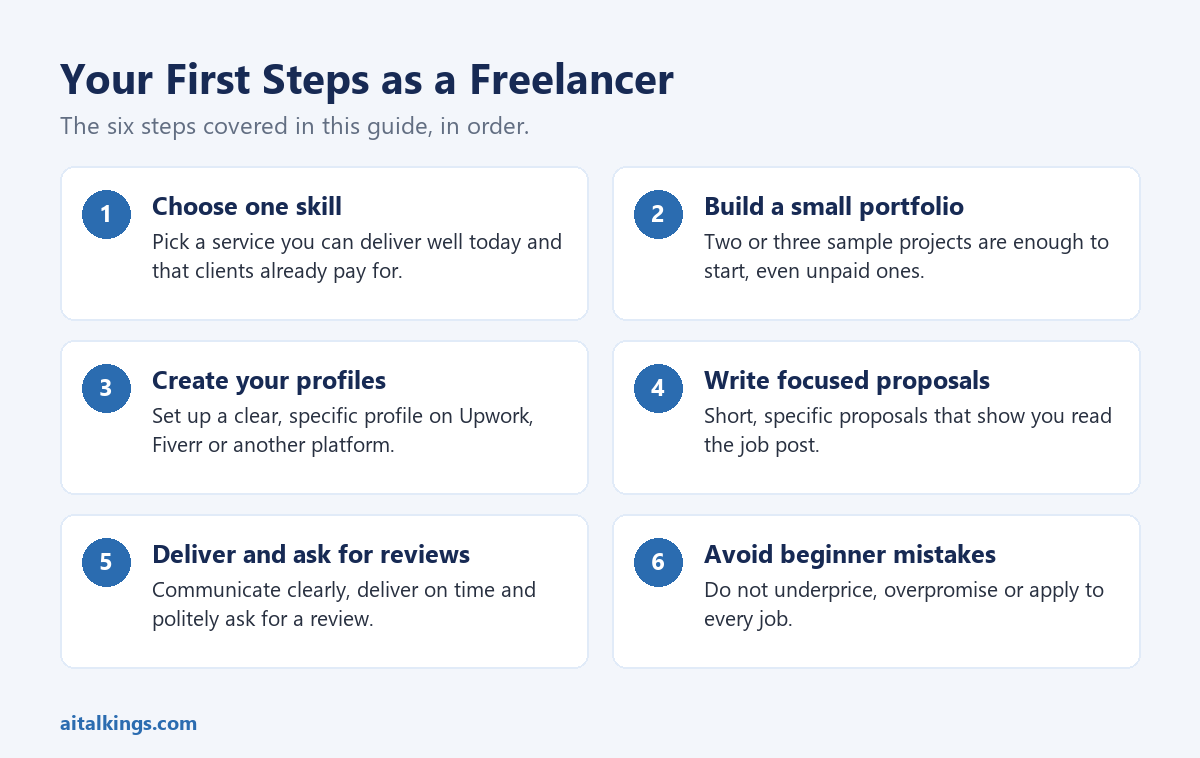
Step 1: Pick One Narrow Skill, Not a Category
“Web developer” is not a skill a client can hire for. “I fix slow WooCommerce stores” is. The narrower the offer, the easier it is for a client to believe you are the right person, and the easier it is for you to get good at it quickly.
How to choose:
- Write down two or three things you can already do to a usable standard today. Not things you want to learn: things you can deliver this week.
- Search for each one on Upwork and Fiverr. Count how many jobs were posted in the last few days, and read what clients actually ask for. The wording in those posts is your future profile title.
- Pick the one with steady demand that you can do fastest. Speed matters more than passion in the first months, because you need reviews.
In web work, the jobs that come up constantly are small and specific: fix a broken plugin, speed up a site, set up a WooCommerce or Shopify store, migrate hosting, fix a layout on mobile. Beginners can win these because established freelancers often do not bother bidding on them.
Step 2: Build Three Portfolio Pieces This Week
“No experience” is a problem you can solve in a week. Clients do not ask whether you were paid for your past work; they ask whether it looks like what they need.
- Build three demo projects in your chosen skill. For a web developer: a small business site, a one-product store, a landing page. Make them real enough to click through.
- Do one or two jobs for free or cheap for someone real: a relative’s shop, a local business, a friend’s side project. Ask for a short written testimonial in return. One honest sentence from a real person beats any sample.
- Document before-and-after. If you sped a site up, keep the PageSpeed screenshots. If you fixed a layout, keep the broken and fixed versions. Clients buy results, and a before-and-after is the clearest result there is.
Where to put it: developers should use GitHub plus a simple one-page site (WordPress or Carrd is fine). Designers use Behance. For a complete beginner, a tidy Google Drive folder with clear file names is enough to start; polish it later.
One warning: AI tools can help you build samples faster, but do not submit AI-generated work you could not reproduce or explain. The first client who asks a follow-up question will find out.
Step 3: Set Up One Platform Properly
Upwork and Fiverr work differently, and beginners do better by choosing one and doing it well.
Fiverr: clients come to you
You publish a “gig” (a fixed service at a fixed price) and wait for orders. It suits small, repeatable jobs: “I will fix one WordPress error”, “I will set up your Shopify store”. Title the gig in the words a client would search, not the words a developer would use. Use your three portfolio pieces as the gig gallery, start at a low price to collect the first few reviews, and then raise it.
Upwork: you apply to posted jobs
Upwork is better for longer and better-paid work, but you spend “Connects” to apply, so each proposal has to count. Three profile details decide whether clients open your proposal at all:
- The title. “WordPress Developer” is invisible. “WordPress & WooCommerce Developer: Speed Fixes, Bug Fixes, Store Setup” tells a client exactly what to hire you for.
- The first line of the overview. It shows in search results. Make it about what you do for clients, not about you.
- The portfolio section. Your three demo projects with a one-line result for each.
Set a modest hourly rate at the start and raise it after the first handful of reviews. A beginner rate that is too high gets no replies; one that is absurdly low attracts the worst clients.
Step 4: Write Proposals That Are About the Client
This is where most beginners stall. They write one proposal, paste it into thirty jobs, and conclude that Upwork is dead. The fix is short and specific:
- Line one is about their problem. Name their platform and what is wrong. “Your WooCommerce checkout failing on mobile is usually a plugin conflict” beats any sentence that starts with “I”.
- One link to one relevant sample. Not your whole portfolio: the one piece closest to their job.
- Two sentences on how you would do it.
- One question that shows you understand the job. Questions get replies.
- Under 150 words.
Apply early: proposals sent within the first hour of a job being posted get read; ones sent two days later usually do not. ChatGPT can help you summarise a long job post or tighten a draft, but write the first two lines yourself. There is a full walkthrough in How to Write Upwork Proposals That Get Replies (and Where ChatGPT Fits).
Step 5: Deliver Well and Ask for the Review
Your first five reviews matter more than anything else you will do this year. They are what every future client sees first.
- Confirm the scope in writing before you start, even if it is just a chat message: what you will do, by when, for how much. Most disputes come from two people remembering a conversation differently.
- Send a short progress update halfway through. Clients who hear nothing assume the worst.
- Deliver with a summary: what you changed, what you tested, anything they should know. For a site fix, include before-and-after screenshots.
- Then ask, once, politely: “If you’re happy with the work, a review would help me a lot as I’m building my profile.” Most satisfied clients will; almost none do it unprompted.
Step 6: The Mistakes That Keep Beginners Stuck
- Working without a deposit or platform protection. On Upwork, use fixed-price milestones funded in escrow; on Fiverr, the platform holds the payment. Off-platform, ask for part of the fee up front. A client who refuses any of these is a client who was not going to pay.
- Saying yes to everything. Taking a React job when you only know WordPress leads to a bad review that follows you for years. Decline, or be honest about what you can and cannot do.
- Spreading across five platforms. One profile with ten reviews beats five profiles with two each.
- Giving up after two weeks. The first job usually takes a few weeks of consistent, specific proposals. Quitting at week two means never finding out whether week three would have worked.
- Ignoring the money side. Work out how you will actually receive payment before you need to. For freelancers in Pakistan and similar countries, that means checking which payout methods your platform supports locally (Payoneer, bank transfer and so on), what the fees are, and how long withdrawals take. Set this up before your first job, not after.
What to Expect in the First Months
Honest expectations beat motivational numbers. Earnings vary enormously by skill, country and how much time you put in, and anyone quoting you a precise monthly figure is guessing. What is consistent is the shape:
- Weeks 1–4: profile, portfolio, lots of proposals, few or no replies. This is normal and is where most people quit.
- First jobs: small, low-paid, and the most important you will ever do, because they produce reviews.
- After a handful of reviews: replies get easier, rates can rise, and the first repeat client appears. Repeat clients are where freelancing stops being a lottery.
The compounding part is reviews and repeat work, not any single big project. Treat every small job as an audition for the next one.
Frequently Asked Questions
Do I need a degree or certification?
No. Clients hire from portfolios and reviews. A certification can help in some fields, but a relevant demo project helps more.
Upwork or Fiverr first?
Fiverr if your service is small and repeatable and you want clients to come to you. Upwork if you can write specific proposals and want longer projects. Pick one for the first few months.
Can I use AI tools in client work?
Yes, as a helper: drafting, summarising, boilerplate. Be honest if asked, test everything, and never deliver something you cannot explain or fix.
Related guides on AiTalkings: