AI in Mental Health: How AI is Transforming Therapy, Diagnosis & Emotional Support
One in eight people globally lives with a mental health condition. Yet fewer than half of those people ever receive any form of treatment.The reasons are familiar: not enough therapists, long waiting lists, high costs, stigma, and geography. In many countries, there is one psychiatrist for every 100,000 people.
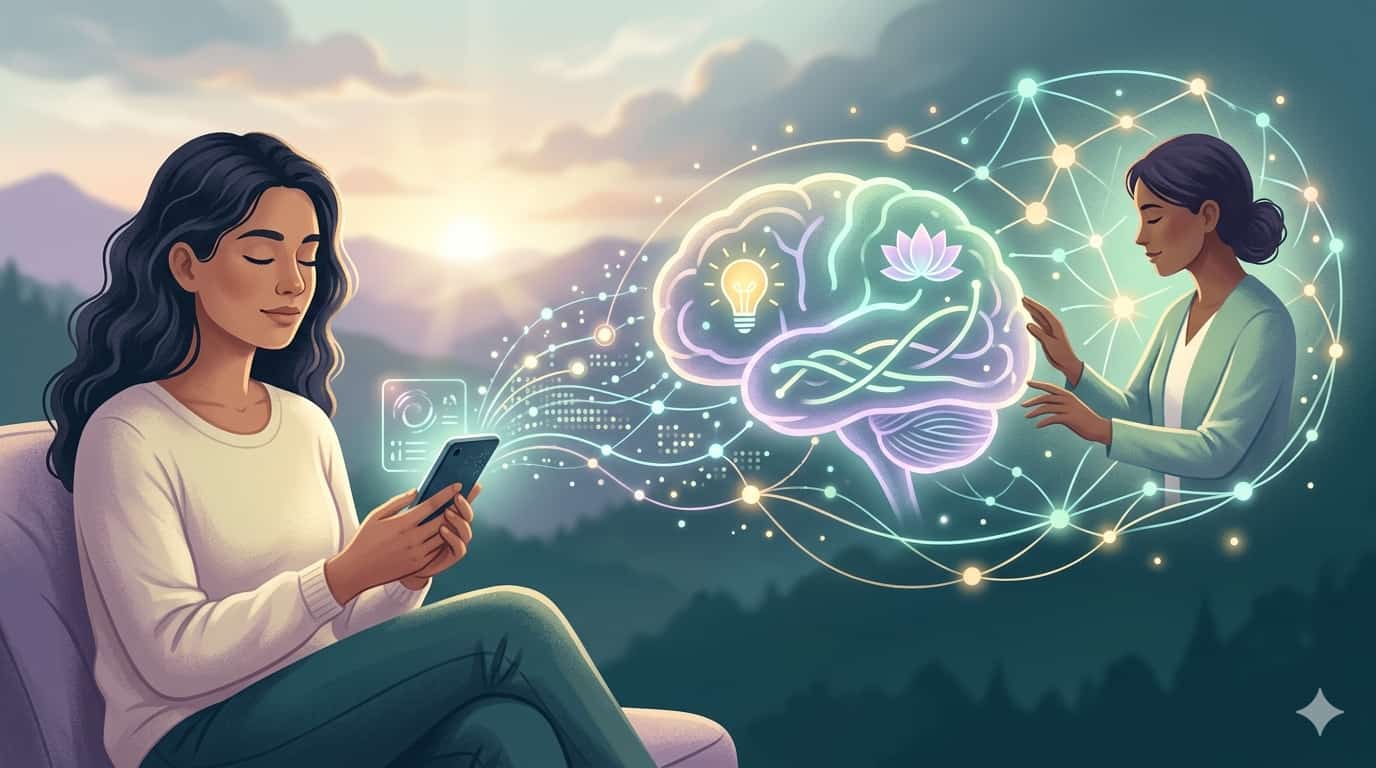
AI cannot replace a trained therapist. But it can do something urgently needed: close the enormous gap between the number of people who need help and the number of professionals available to provide it.
From detecting depression in your voice before you even realise something is wrong, to delivering evidence-based therapy techniques through a smartphone app at 3am — AI in mental health is not a future possibility. It is happening now, and it is already helping millions of people.
How AI is Being Used in Mental Health Right Now
Mental health is one of the most nuanced areas in medicine — which is exactly why AI’s role here is about augmentation, not replacement. Here is where it is making a measurable difference:

1. AI Therapy Chatbots and Digital CBT
Cognitive Behavioural Therapy (CBT) is the most evidence-based treatment for depression and anxiety. AI is now delivering CBT techniques at scale through conversational chatbots.
| Tool | What It Does |
|---|---|
| Woebot (woebothealth.com) | AI mental health chatbot delivering CBT and DBT techniques. Clinical trials show significant reductions in depression and anxiety. Free to use. |
| Wysa (wysa.io) | AI emotional support chatbot with clinically validated exercises — used in NHS partnerships in the UK. |
| Youper (youper.ai) | AI-powered mood tracking and CBT exercises — personalises therapy sessions based on user patterns over time. |
| Mindstrong (mindstrong.com) | Uses smartphone usage patterns (typing speed, scroll behaviour) to monitor mental health state continuously. |
| Koko (koko.world) | AI-assisted peer support platform — used on social platforms to detect and reach users in distress. |
📌 A randomised controlled trial published in JMIR Mental Health found that Woebot reduced symptoms of depression and anxiety in college students within 2 weeks — comparable to short-term human-led CBT sessions.
2. AI for Early Detection of Mental Health Conditions
The most powerful application of AI in mental health may be detection — identifying conditions before they become crises.
| AI Detection Method | What It Can Identify |
|---|---|
| Voice analysis AI | Depression, bipolar disorder, and schizophrenia can produce measurable changes in speech patterns — AI detects these with high accuracy |
| Facial expression analysis | Subtle facial micro-expressions correlate with depression and anxiety states — AI video tools analyse these in therapy sessions |
| Social media monitoring | NLP models scan posting patterns for indicators of suicidal ideation, depression, and psychosis risk |
| Smartphone usage patterns | Sleep disruption, reduced social interaction, and erratic typing all correlate with worsening mental health — AI models detect the change |
| EEG + AI | Brain activity patterns analysed by AI can distinguish between different types of depression to guide treatment choice |
Key platforms doing this work:
- Kintsugi (kintsugihealth.com) — voice biomarker AI that detects signs of depression and anxiety in under 20 seconds of speech. Already integrated with telehealth platforms.
- Sonde Health (sondehealth.com) — mental fitness monitoring through voice analysis, designed for integration into phone calls and voice interfaces.
- Ellipsis Health (ellipsishealth.com) — clinical-grade depression and anxiety screening via voice, validated against PHQ-9 and GAD-7 clinical standards.
3. AI for Suicide Risk Prediction and Prevention
This is arguably the most sensitive and important application. AI models are being deployed in hospitals and telehealth platforms to identify patients at elevated suicide risk before a crisis occurs.
| System | Where It Is Used |
|---|---|
| Columbia Suicide Severity Rating Scale + AI | Automated risk stratification in emergency departments |
| Facebook/Meta AI safety system | Detects posts and messages indicating suicidal ideation — routes users to crisis resources or triggers welfare checks |
| Crisis Text Line AI | Analyses incoming texts to flag the highest-risk conversations for immediate human crisis counsellor escalation |
| Vanderbilt University Medical Center model | Predicts suicide attempts up to 90 days in advance using EHR data — allows proactive outreach |
⚠️ Important note: AI suicide risk tools are used to support clinical decision-making, not replace it. A high-risk flag from an AI model should trigger human review and response — not an automated intervention.
4. AI-Assisted Psychiatric Diagnosis
Traditional mental health diagnosis relies heavily on clinical interviews, questionnaires, and clinician judgment. AI is now adding objective, data-driven layers to this process.
- Spring Health (springhealth.com) — uses machine learning to match patients to the most effective treatment pathway — therapy, medication, or combination — based on clinical history. Used by major US employers as a mental health benefit.
- Limbic (limbic.ai) — AI assessment tool used in NHS talking therapy services to triage patients, reducing wait times from months to days.
- Quartet Health (quartethealth.com) — AI platform that identifies patients in need of mental health support by analysing medical claims and EHR data — then connects them to care automatically.
- Brightside (brightside.com) — AI-powered platform combining psychiatry and therapy — the AI tracks medication response and flags when adjustments are needed.
5. AI in PTSD and Trauma Treatment
Post-Traumatic Stress Disorder is one of the most difficult conditions to treat — and one where AI is showing promising results through innovative delivery methods.
| Approach | Platform |
|---|---|
| Virtual Reality Exposure Therapy | Limbix, Oxford VR — VR environments where AI adapts the exposure intensity based on patient physiological response |
| Chatbot-delivered Prolonged Exposure | PTSD Coach (VA-backed app) — AI guides veterans through exposure exercises between therapy sessions |
| Biometric-responsive therapy | Innerworld — VR avatar-based therapy where AI adjusts the experience based on real-time heart rate and stress signals |
📌 A US Department of Veterans Affairs study found that PTSD Coach — an AI-assisted app — significantly reduced PTSD symptom severity in veterans who used it between therapy sessions, improving treatment outcomes.
AI Mental Health Tools Available Right Now — By Use Case
| What You Need | Tool to Try |
|---|---|
| Free therapy exercises anytime | Woebot (woebothealth.com) — free CBT chatbot |
| Mood tracking and pattern recognition | Youper (youper.ai) or Daylio (daylio.net) |
| Guided meditation and stress reduction | Calm (calm.com) or Headspace (headspace.com) — both use AI personalisation |
| Sleep + mental health monitoring | Rise (risescience.com) — AI sleep coach linking sleep quality to mental health |
| Crisis support (24/7) | Crisis Text Line — text HOME to 741741 (US), or iCall / Vandrevala Foundation (Pakistan/India) |
| Professional AI-assisted therapy matching | Spring Health (via employer) or BetterHelp (betterhelp.com) |
The Limitations AI Cannot Overcome in Mental Health
AI in mental health works best as a complement to human care, not a replacement. These are hard limits:
- Therapeutic relationship — the healing power of genuine human connection, trust, and empathy cannot be replicated by AI
- Complex diagnosis — personality disorders, psychosis, and complex trauma require deep clinical assessment that AI cannot safely conduct alone
- Crisis intervention — a person in immediate danger needs a trained human, not a chatbot
- Cultural and linguistic nuance — mental health expression varies enormously across cultures; most AI tools are trained on Western, English-language datasets
- Medication management — prescribing and adjusting psychiatric medication requires a licensed clinician
⚠️ Disclaimer: AI mental health tools are not substitutes for professional psychiatric or psychological care. If you or someone you know is experiencing a mental health crisis, please contact a qualified professional or crisis service immediately.
What This Means for Pakistan and South Asia
Mental health remains severely under-resourced across South Asia. Pakistan has fewer than 500 psychiatrists for a population of over 230 million.
AI tools represent a genuine opportunity to expand access — but adoption requires:
- Local language support (Urdu, Hindi, Bengali) — currently limited but improving
- Cultural adaptation of therapy content
- Integration with mobile platforms, given high smartphone penetration
- Awareness campaigns to reduce stigma around digital mental health tools
Platforms already operating in the region include Umang (umang.com.pk) — Pakistan’s first digital mental health platform — and iCall (icallhelpline.org) in India.
The Bottom Line
Mental health is a global crisis of scale. There are simply not enough trained professionals to meet the need — and that gap is growing.
AI is not the whole answer. But it is a meaningful part of it. Tools that screen for depression in a voice call, deliver CBT to someone who cannot afford therapy, or flag a high-risk patient before they reach crisis point — these tools are saving lives right now.
The question for healthcare systems, governments, and individuals is not whether to use AI in mental health. It is how to use it responsibly, equitably, and in combination with the human care that it can never fully replace.