The Freelance Solopreneur’s Blueprint: How to Pitch, Price, and Deliver AI-Powered Client Projects
Every small business owner knows they need artificial intelligence in 2026, but almost none of them know how to actually implement it. They hear buzzwords on social media about autonomous agents, automated lead generation, and custom chatbots, yet they lack the technical capability to connect these tools to their existing websites, CRMs, and customer databases.
For freelance developers, digital consultants, and tech solopreneurs, this gap represents the single largest freelance service opportunity of the decade. Businesses are eager to pay $1,500 to $5,000+ for practical AI implementations that save their staff 10 hours a week or boost customer response rates.
However, selling AI services is fundamentally different from traditional web design or coding projects. If you overpromise, you end up with frustrated clients complaining about AI hallucinations. If you underprice, you will spend weeks debugging edge-case workflows for pennies. In this blueprint, we break down how to discover high-value client pain points, pitch winning proposals, price profitably, and execute clean deliverables.
Phase 1: Identifying High-Value AI Use Cases (What Actually Sells)
The most common mistake junior freelancers make is pitching technology instead of business outcomes. Clients do not care about vector embeddings or temperature parameters; they care about saving payroll hours, recovering lost sales leads, and eliminating repetitive manual paperwork.
Here are three high-demand, high-converting service offerings that small-to-medium businesses are actively paying for right now:
1. The Website AI Sales & FAQ Specialist
The Client’s Problem: Website visitors arrive after business hours, have questions about pricing or service details, get no immediate answer, and leave without booking.
The Solution: A customized knowledge-base chatbot embedded on their WordPress or Shopify website, trained on their PDF service manuals, past email tickets, and pricing sheets. The bot answers customer inquiries accurately and captures their contact info directly into their CRM.
2. Automated Inbound Lead Enrichment & Routing
The Client’s Problem: Sales reps waste hours Googling prospective clients to find their company size, industry category, and LinkedIn profiles before scheduling discovery calls.
The Solution: A background webhook automation (using n8n or Make) that takes form submissions, scrapes the prospect’s website with an LLM, generates an executive summary report, and drops it into a Slack channel or CRM card 30 seconds after form submission.
3. Document Data Extraction & Invoice Processing
The Client’s Problem: Accounting or admin staff manually keying data from incoming vendor PDF invoices into spreadsheets or accounting software.
The Solution: An automated pipeline where incoming email attachments are analyzed by a vision-enabled language model, parsed into strict tabular JSON, and automatically synchronized with QuickBooks, Xero, or Google Sheets.
Phase 2: The High-Converting Proposal Template
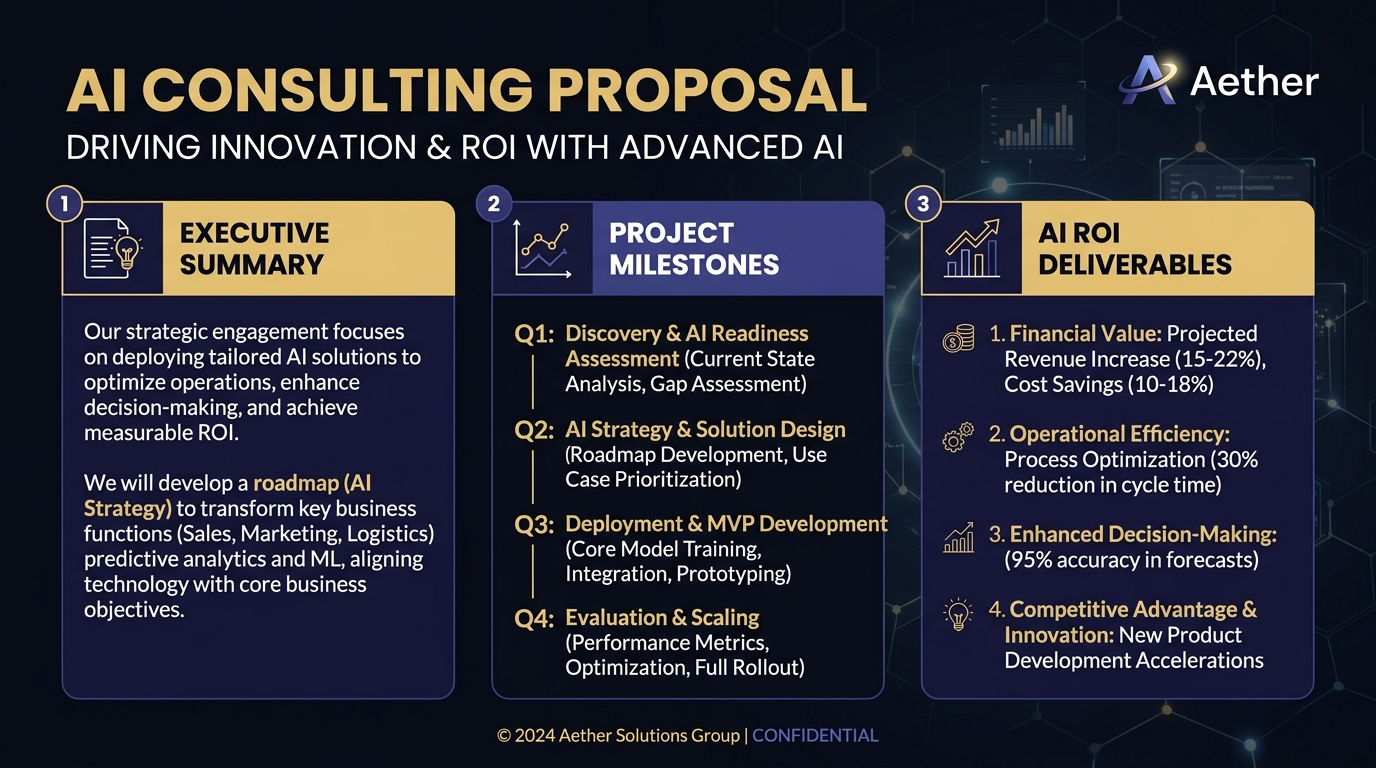
When pitching clients on platforms like Upwork, Fiverr Pro, or via direct outreach, ditch generic corporate cover letters. Use this proven 4-part framework that immediately establishes your authority:
Hi [Client Name],

I saw you're looking to automate [Specific Problem, e.g. customer service ticket triage]. Most companies try to solve this with generic chatbots that give unreliable answers because they lack strict knowledge boundaries.

Here is the exact approach I recommend for your [Platform, e.g. WordPress site]:
1. Knowledge Ingestion: We index your verified documentation into a private vector store so the AI never guesses or hallucinates.
2. Structured Escalation: If a customer question falls outside the verified knowledge base, the bot immediately captures their phone/email and pings your support team via email/Slack.
3. Test Sandbox: You get a private test link to try out all edge-case questions before anything goes live to your real customers.

I recently implemented a similar workflow for a [Similar Business Niche], which cut their first-response time down from 4 hours to under 30 seconds.

Are you available for a brief 10-minute chat this Tuesday or Wednesday to review your documentation requirements?

Best regards,
[Your Name]
WordPress & AI Automation Specialist
Phase 3: Pricing Strategy—Hourly vs. Fixed Project Packages
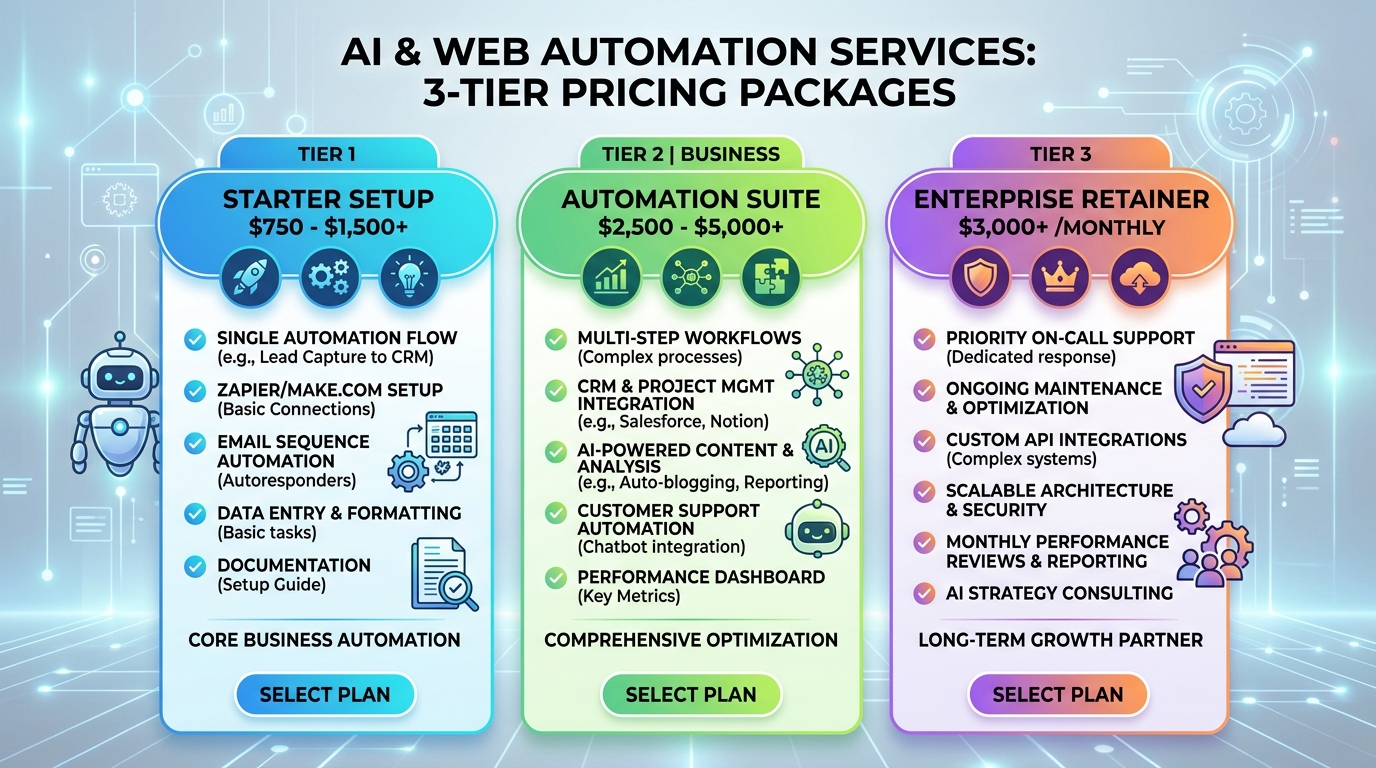
Never bill AI automations on an hourly basis. Why? Because once you build reusable templates and workflow modules, a solution that takes you 3 hours to deploy might deliver $20,000 in annual labor savings to your client. Charging $50/hour would mean you earn $150 for tens of thousands of dollars in value.
Instead, package your offerings into tiered fixed-price bundles with clear boundaries:
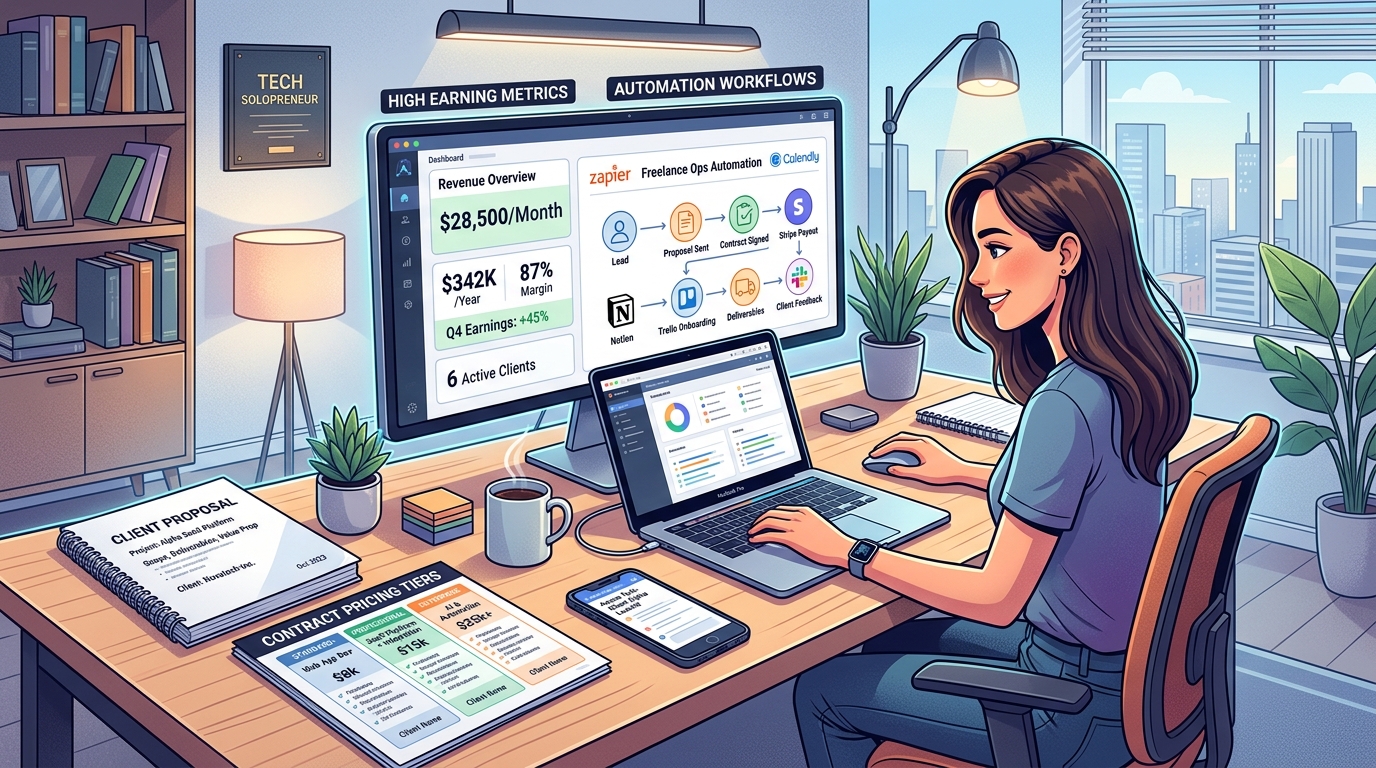
| Service Tier | Deliverables Included | Ideal Client Profile | Target Price Range |
|---|---|---|---|
| Tier 1: Starter Assistant | Single customized web chatbot, up to 10 indexed documents, email capture form, 14 days warranty. | Local service businesses (dentists, real estate agents, law firms) | $850 – $1,500 |
| Tier 2: Business Workflow Suite | Website bot + CRM integration + Slack lead alerts + multi-step qualification logic + staff training video. | E-commerce stores, B2B agencies, SaaS startups | $2,200 – $4,500 |
| Tier 3: Enterprise Custom Pipeline | Multi-agent workflow, document extraction, private VPS self-hosted instance, dedicated maintenance retainer. | Mid-size companies, high-volume operations | $5,000 – $10,000+ ($500/mo retainer) |
Phase 4: Flawless Delivery and Building Recurring Monthly Retainers
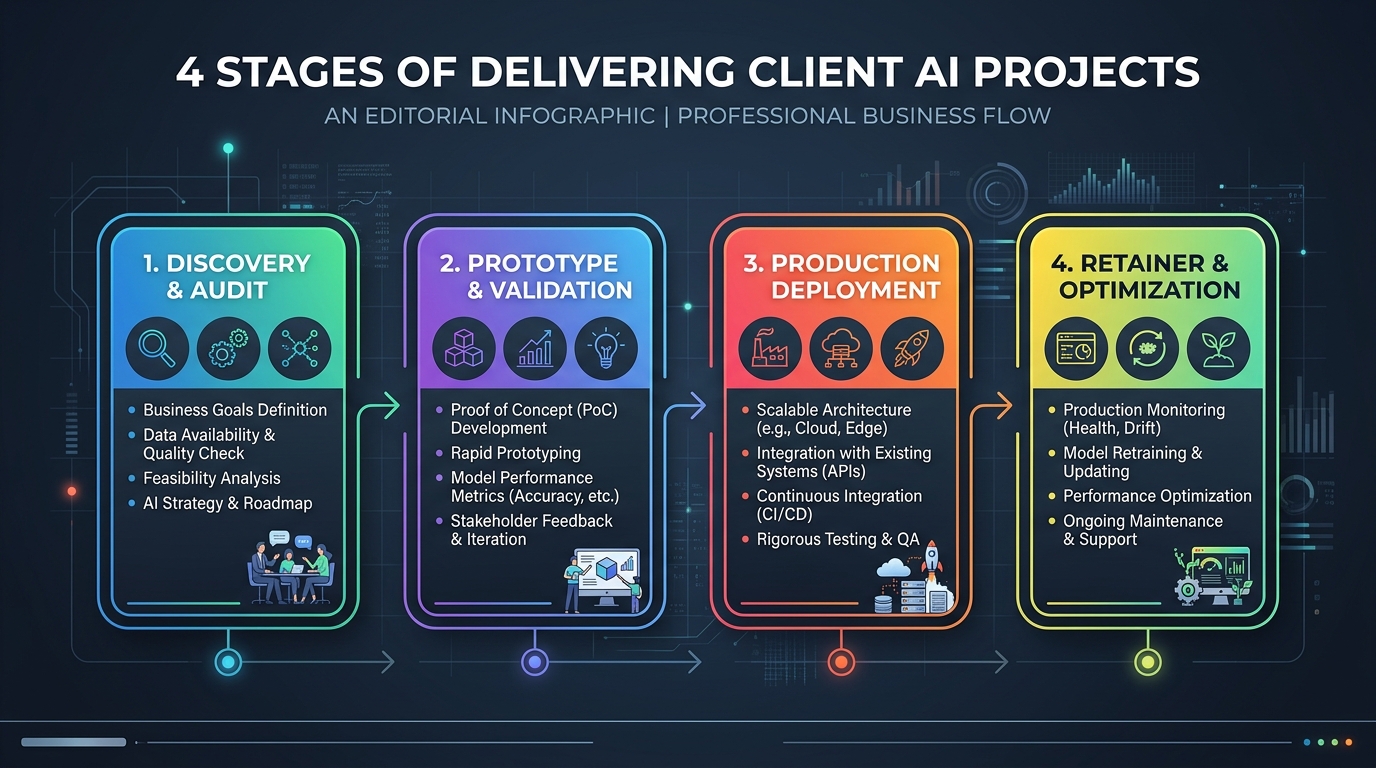
The secret to steady freelancing income is not chasing new clients every Monday—it is turning one-off build projects into predictable monthly maintenance retainers. After launching an AI project, pitch the client an ongoing Care & Optimization Retainer for $200 to $500 per month covering:
- Log Auditing & Hallucination Monitoring: Reviewing monthly conversation transcripts to identify unanswered questions or edge-case misunderstandings.
- Prompt & Model Optimization: Updating the knowledge base whenever the client updates their prices, policies, or product catalogue.
- Token & API Management: Ensuring rate limits are never exceeded and keeping integrations synchronized through third-party API updates.
Conclusion: Start Building Your Portfolio Today
The window of opportunity in AI freelancing is wide open right now. Businesses understand that artificial intelligence is vital to remaining competitive, but they need dependable, practical freelancers who understand business realities, maintain clean communication, and deliver results that work on day one.
Build one working demonstration on your own portfolio site, document the results, and start reaching out to businesses that need your help. The demand is here—it’s time to build.